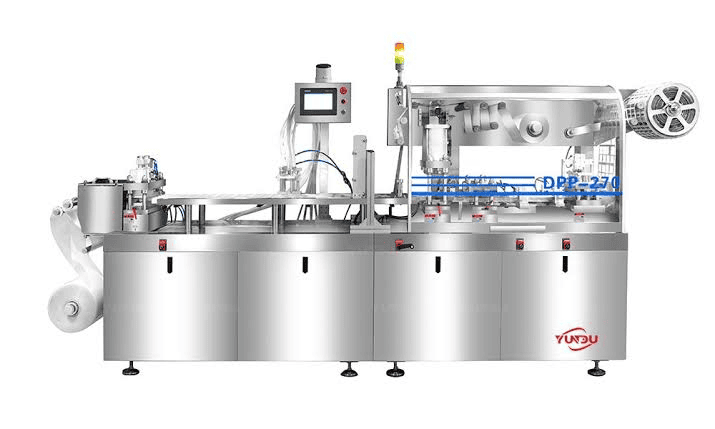
A blister packing machine is a specialized packaging system designed to place products inside formed cavities and seal them with a backing material. These machines are widely used in pharmaceutical, medical, food, electronics, hardware, and consumer product industries.
Blister packaging offers a practical combination of product protection, organization, visibility, and presentation. Modern machines can automate several stages of the packaging process, helping manufacturers produce large quantities of consistent packages.
The right equipment can improve production speed, reduce manual handling, and support reliable package quality. However, choosing a suitable machine requires careful consideration of product size, packaging materials, production volume, automation, and sealing requirements.
What Is a Blister Packing Machine?
A blister packing machine is equipment that packages individual products inside pre-formed cavities. The cavity holds the product securely, while a backing layer closes the package.
The machine can use heat, pressure, or other controlled methods to form and seal packaging materials. Depending on the equipment, it may also handle feeding, cutting, printing, coding, and inspection.
Blister packaging is especially useful for products that need to remain separated during transportation, storage, and handling. The final package can also be designed to display product information clearly.
How Does Blister Packaging Work?
The blister packaging process begins with a roll or sheet of suitable packaging material. The material enters the forming section of the machine.
Heat or pressure is applied to create cavities that match the shape and dimensions of the product. Once the cavities are ready, products are positioned inside them.
A backing material is then placed over the formed cavities. The sealing station applies controlled pressure and temperature to create a secure bond.
After sealing, the packaged sheet moves to a cutting station. The machine separates individual packs or groups of packs according to the required design.
Advanced systems may complete several of these operations automatically.
Main Stages of the Blister Packing Process
A typical production cycle includes several important stages.
Material feeding moves the packaging film or sheet into the machine.
Forming creates individual cavities for the products.
Product loading places each item into the correct cavity.
Sealing joins the backing material to the formed package.
Printing or coding can add information such as batch numbers or production details.
Cutting separates individual packages from the larger sheet.
Inspection checks the finished packages for visible defects or missing products.
The exact sequence can vary depending on machine design and application requirements.
Important Components of a Blister Packing Machine
Several components work together to create a finished blister pack.
The forming station creates cavities in the packaging material. Its tooling must match the product dimensions.
The feeding system places products into the cavities. Accurate feeding is important because incorrectly positioned products can create defective packages.
The sealing unit joins the blister material and backing layer. Consistent sealing conditions help maintain package integrity.
The cutting system separates finished packs into the desired shape.
Modern machines may also include sensors, conveyors, control panels, printers, coding systems, and automated inspection equipment.
Types of Blister Packing Machines
Different blister packing machines are available for different production requirements.
Manual machines require significant operator involvement and can be useful for small production activities.
Semi-automatic machines automate some packaging stages while operators handle other tasks. They can provide a balance between flexibility and productivity.
Fully automatic machines can integrate forming, feeding, sealing, cutting, and inspection into a continuous production process.
Some machines use flat forming systems, while others use rotary designs. The best configuration depends on product dimensions, packaging format, production volume, and available workspace.
Materials Used for Blister Packaging
Packaging materials have a major effect on machine performance and final package quality.
Plastic films are commonly used to create transparent cavities. Different films provide different levels of flexibility, strength, transparency, and barrier protection.
Aluminum-based materials may be used when stronger protection from light or moisture is required.
Paperboard can also be included in some blister packaging formats. It provides space for branding, instructions, product information, and other printed content.
Material selection should consider the product, storage environment, sealing method, appearance, and applicable packaging requirements.
Benefits of Using a Blister Packing Machine
A blister packing machine can provide several advantages to manufacturers.
One major benefit is consistent packaging quality. Automated equipment can produce packages with similar dimensions and sealing characteristics throughout a production run.
Blister packaging also provides good product organization. Each item has its own cavity, which can reduce movement during handling.
Other benefits include:
- Faster packaging operations
- Reduced manual handling
- Consistent product positioning
- Professional product presentation
- Efficient use of packaging materials
- Flexible package designs
- Easy product identification
- Compatibility with automation
The equipment can therefore support businesses looking to improve both productivity and packaging consistency.
Industries That Use Blister Packaging
Blister packing machines are used across many industries.
The pharmaceutical sector is one of the best-known users of blister packaging. Individual cavities can help organize products and provide convenient unit separation.
Medical and healthcare products may also require individual packaging for organization and protection.
Consumer goods manufacturers use blister packs for small products and accessories. Hardware, electronics accessories, personal care items, and household products can also be packaged using this format.
Other applications include:
- Small tools
- Electrical components
- Stationery
- Food products
- Personal care products
- Industrial accessories
- Consumer electronics
The versatility of blister packaging allows manufacturers to customize cavity shapes and package sizes for different products.
Automatic Versus Semi-Automatic Machines
The choice between automatic and semi-automatic equipment depends on production requirements.
Semi-automatic machines can be suitable for smaller operations. They may require operators to load products while the machine performs forming, sealing, and cutting.
Fully automatic machines require less manual intervention. They can use automatic feeding systems and integrated controls to maintain continuous production.
Automatic equipment generally provides higher output, but it can require greater investment and more complex maintenance.
Businesses should compare production volume, labor availability, machine cost, floor space, and expected future demand before making a decision.
Importance of Proper Sealing
Sealing is one of the most critical steps in blister packaging. A poor seal can affect package integrity and reduce the protection provided to the product.
Several factors influence sealing quality. These include temperature, pressure, sealing time, material compatibility, and tooling condition.
Manufacturers should establish suitable operating parameters and monitor them during production.
Regular testing can help identify incomplete seals, wrinkles, contamination, or other problems. Proper maintenance of the sealing station is also essential for consistent results.
Machine Speed and Production Capacity
Production capacity should be considered before selecting a blister packing machine. Different machines can operate at different speeds depending on their design and configuration.
A business producing a small number of packages may not need a high-speed automated system. A large manufacturer may require continuous production with automatic feeding and inspection.
Machine speed should also be evaluated alongside product handling accuracy. Extremely high output is not useful if it creates excessive defective packages.
A balanced system should provide suitable speed while maintaining reliable quality.
Maintenance of Blister Packaging Equipment
Regular maintenance helps keep a blister packing machine operating efficiently. Operators should follow the manufacturer’s maintenance recommendations.
Forming tools, sealing surfaces, cutting mechanisms, sensors, conveyors, and feeding systems should be inspected regularly.
Cleaning is also important. Accumulated material or debris can affect product feeding and sealing performance.
Preventive maintenance can reduce unexpected breakdowns and extend equipment life. Replacing worn components before they fail can also help avoid production interruptions.
How to Choose the Right Machine
Selecting the right blister packing machine requires careful planning.
First, consider the product’s size, shape, weight, and physical characteristics. The machine must be capable of handling the product accurately.
Next, determine the required production capacity. This helps establish whether a manual, semi-automatic, or fully automatic machine is appropriate.
Packaging material compatibility is another important consideration. The machine should support the selected forming and sealing materials.
Businesses should also evaluate:
- Machine dimensions
- Tooling flexibility
- Changeover requirements
- Sealing technology
- Automation features
- Safety systems
- Maintenance requirements
- Technical support
- Total operating costs
Choosing equipment based on actual production needs can provide better long-term value.
Ways to Improve Packaging Efficiency
Manufacturers can improve packaging efficiency by keeping machine settings properly optimized. Operators should receive appropriate training before using the equipment.
Reducing changeover time can also improve productivity when multiple products are packaged on the same machine.
Preventive maintenance helps avoid unexpected downtime. Monitoring production data can identify recurring problems and areas for improvement.
Automation can further increase efficiency by connecting feeding, sealing, coding, inspection, and cutting operations into one workflow.
Efficient packaging is not only about machine speed. Consistent quality, low material waste, reduced downtime, and reliable operation are equally important.
Conclusion
A blister packing machine provides an efficient solution for producing organized, protective, and professional-looking packages. Modern systems can automate forming, product feeding, sealing, cutting, coding, and inspection.
The ideal machine depends on the product, packaging material, production volume, desired automation, and available workspace. Proper machine maintenance and quality monitoring are also essential for long-term performance.
For businesses seeking dependable packaging production, investing in the right blister packing machine can improve efficiency, reduce manual work, and support consistent package quality. With suitable equipment and careful process management, blister packaging can remain an effective solution for a wide range of modern manufacturing applications.