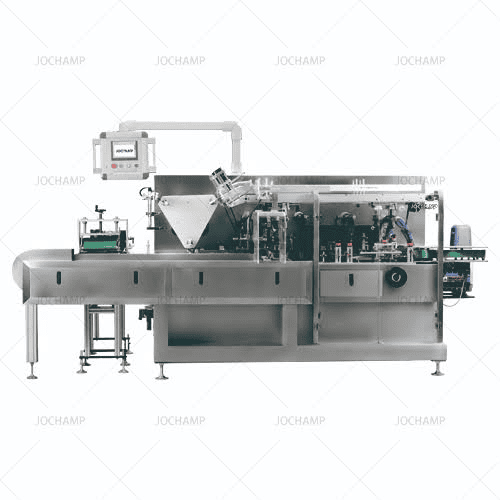
The 80-120 PPM Shisha Cartoning Machine is a high-speed automated packaging solution designed for manufacturers that need consistent carton packaging at production rates between 80 and 120 packs per minute. It combines product handling, carton forming, loading, closing, and other packaging operations into an organized production process.
As packaging operations become more automated, manufacturers need machinery that can deliver reliable output without compromising package quality. A high-speed cartoning machine can reduce repetitive manual work and help businesses maintain consistent packaging standards.
The ideal machine depends on several factors, including product dimensions, carton design, production volume, feeding method, sealing requirements, and desired automation. Understanding these features can help manufacturers select a suitable system for their production environment.
What Is an 80-120 PPM Shisha Cartoning Machine?
An 80-120 PPM Shisha Cartoning Machine is an automated system designed to package shisha-related products into cartons at a nominal rate of approximately 80 to 120 packs per minute.
PPM stands for “packs per minute” and is commonly used to describe packaging equipment capacity.
The machine can automate several tasks that might otherwise require manual labor. These tasks can include picking individual cartons from a magazine, opening cartons, positioning products, inserting products, closing cartons, and transferring completed packages.
This type of machine is suitable for manufacturers that require a high level of packaging consistency and a continuous production process.
How Does the Cartoning Machine Work?
The cartoning process begins with flat cartons stored in a carton magazine. The machine picks individual cartons and transfers them to the opening station.
At the same time, products move through a feeding system toward the loading area. Sensors and mechanical guides help synchronize product movement with carton positioning.
Once a carton is open and correctly positioned, the loading mechanism places the product inside.
The carton then moves toward the closing station. Flaps are folded into the required position, and the carton is closed or sealed according to its design.
Finally, completed cartons leave the machine and continue toward other packaging stages.
Main Steps in the Cartoning Process
A typical automated cartoning cycle includes several stages.
Carton feeding: Flat cartons are supplied from a magazine.
Carton opening: Each carton is opened and shaped correctly.
Product feeding: Products are moved toward the loading area.
Product insertion: The product is placed inside the carton.
Carton closing: The carton flaps are folded.
Sealing: Adhesive, tuck-in flaps, or another closure method secures the package.
Discharge: Finished cartons are transferred to the next production stage.
Depending on the machine configuration, coding, inspection, weighing, and rejection systems can also be integrated.
Key Components of the Machine
An 80-120 PPM cartoning machine contains several components that must operate in synchronization.
The carton magazine holds flat cartons before they enter the machine.
The carton feeding mechanism separates cartons and moves them toward the opening section.
The opening system forms each carton into the correct shape.
The product conveyor transports products toward the loading station.
The loading mechanism inserts products into cartons accurately.
The closing system folds carton flaps and prepares the package for final closure.
Sensors and control systems monitor different stages of the process. These components help identify missing cartons, product-positioning problems, and other conditions that could affect production.
Understanding 80-120 PPM Production Capacity
The 80-120 PPM specification indicates the machine’s intended packaging speed range. However, actual production output can vary.
Factors such as product dimensions, carton design, feeding accuracy, changeover time, operator experience, and machine settings can affect the real output.
Manufacturers should therefore evaluate the machine under actual production conditions rather than relying only on a maximum speed specification.
A machine operating consistently within the required range can provide better productivity than a faster system that experiences frequent interruptions.
Product Feeding and Positioning
Accurate product feeding is essential for high-speed cartoning.
Products must arrive at the loading station at the correct time and in the correct orientation. Conveyors, guides, sensors, and automated feeding mechanisms help coordinate this process.
Incorrect positioning may result in products becoming stuck, incorrectly inserted, or damaged during packaging.
The feeding system should therefore be selected based on the product’s shape, dimensions, weight, and surface characteristics.
A well-designed feeding system helps maintain smooth operation and reduces unnecessary production stoppages.
Automatic Carton Feeding
Automatic carton feeding allows the machine to handle flat cartons with minimal operator intervention.
Cartons are stored in a magazine and supplied individually to the machine. A mechanical or vacuum-based system may be used to pick and transfer them.
Consistent carton feeding becomes especially important at production rates of 80-120 PPM. Feeding errors can cause machine stops and reduce overall output.
Sensors can monitor carton availability and position. These controls can help prevent the machine from continuing a cycle when a carton is missing or incorrectly positioned.
Carton Opening and Forming
After feeding, each carton must be opened correctly before product insertion.
The opening system separates the carton panels and forms the package into its intended shape.
Carton material quality can influence this stage. Cartons that are poorly cut, incorrectly folded, or inconsistent in size may cause opening problems.
Manufacturers should use cartons that meet the required specifications for the selected machine.
Proper carton opening helps create a stable package and supports accurate product loading.
Product Insertion and Loading
The product insertion system transfers products into prepared cartons.
Different machine designs may use pushing mechanisms, pick-and-place systems, or other automated methods.
The insertion process must be synchronized with carton movement. At higher production speeds, even small timing errors can cause repeated problems.
Guides and sensors help maintain product alignment.
Manufacturers should test product loading carefully during machine commissioning to ensure that products are inserted smoothly without damaging either the product or carton.
Carton Closing and Sealing
Once the product is inside, the carton needs to be closed.
Some cartons use tuck-in flaps, while others require adhesive or another sealing method. The machine’s closing mechanism must match the carton design.
Accurate flap folding creates a neat appearance and helps maintain package integrity.
When adhesive is used, application must be properly controlled. Excessive adhesive can affect appearance, while insufficient adhesive may result in poor closure.
Regular inspection of the closing system can help maintain consistent package quality.
Benefits of an 80-120 PPM Cartoning Machine
An 80-120 PPM Shisha Cartoning Machine can provide several benefits for suitable production environments.
One major advantage is high packaging productivity. Automated equipment can handle large volumes with reduced manual intervention.
Other benefits include:
- Consistent carton formation
- Accurate product insertion
- Reduced repetitive labor
- Faster packaging operations
- Improved package appearance
- Better production consistency
- Easier integration with packaging lines
- Reduced manual handling
Automation can also help manufacturers standardize packaging procedures across production shifts.
Quality Control During Cartoning
Quality control is essential for maintaining reliable packaging.
The machine should be monitored for missing cartons, incorrectly positioned products, damaged packaging, incomplete closures, and coding errors.
Sensors can identify some common faults automatically. More advanced systems may use cameras or other inspection technologies.
Operators should also perform regular checks during production.
Quality inspections can reduce the number of defective packages reaching later production stages and help identify machine problems early.
Machine Flexibility and Changeovers
Many manufacturers need to package different products or carton sizes. Machine flexibility can therefore be valuable.
Adjustable guides and quick-change tooling can reduce setup time between production runs.
Digital controls may allow operators to save and recall settings for different formats.
Shorter changeovers can increase machine availability and improve overall production efficiency.
Businesses should consider how frequently they change products before selecting equipment.
Maintenance and Operator Training
Regular maintenance is important for high-speed cartoning equipment.
Operators should inspect carton feeders, product conveyors, loading systems, sensors, folding mechanisms, and sealing components according to the manufacturer’s maintenance schedule.
Cleaning should also be performed regularly to prevent dust and packaging debris from affecting machine operation.
Preventive maintenance can help identify worn components before they cause unexpected failures.
Operators should receive proper training in machine controls, safety procedures, changeovers, cleaning, and basic troubleshooting.
How to Choose the Right Cartoning Machine
Before purchasing an 80-120 PPM Shisha Cartoning Machine, manufacturers should carefully evaluate their packaging requirements.
Important considerations include product dimensions, carton specifications, desired output, machine footprint, automation level, and sealing method.
Businesses should also consider:
- Carton material compatibility
- Product feeding method
- Changeover time
- Control system
- Safety features
- Maintenance requirements
- Spare parts availability
- Technical support
- Energy consumption
- Total operating cost
Testing the machine with actual products and cartons can provide valuable information about real-world performance.
Improving Packaging Line Efficiency
A high-speed cartoning machine should be properly integrated with the rest of the packaging line.
Upstream equipment must supply products at a consistent rate. Downstream equipment should also be capable of handling the finished cartons.
Regular maintenance helps minimize unexpected downtime. Monitoring production data can reveal recurring problems such as carton jams, product misalignment, or excessive rejects.
Operator training can further improve performance.
Using consistent carton quality and properly prepared products also helps maintain stable operation.
Conclusion
The 80-120 PPM Shisha Cartoning Machine is designed to support high-volume automated carton packaging. By combining carton feeding, opening, product insertion, closing, sealing, and discharge operations, it can reduce repetitive labor and improve production consistency.
The most suitable machine depends on product specifications, carton design, production requirements, automation level, and available space. Proper maintenance and operator training are equally important for dependable performance.
When correctly selected and integrated, high-speed cartoning equipment can help manufacturers create a smoother packaging workflow, maintain consistent carton quality, and meet demanding production targets efficiently.