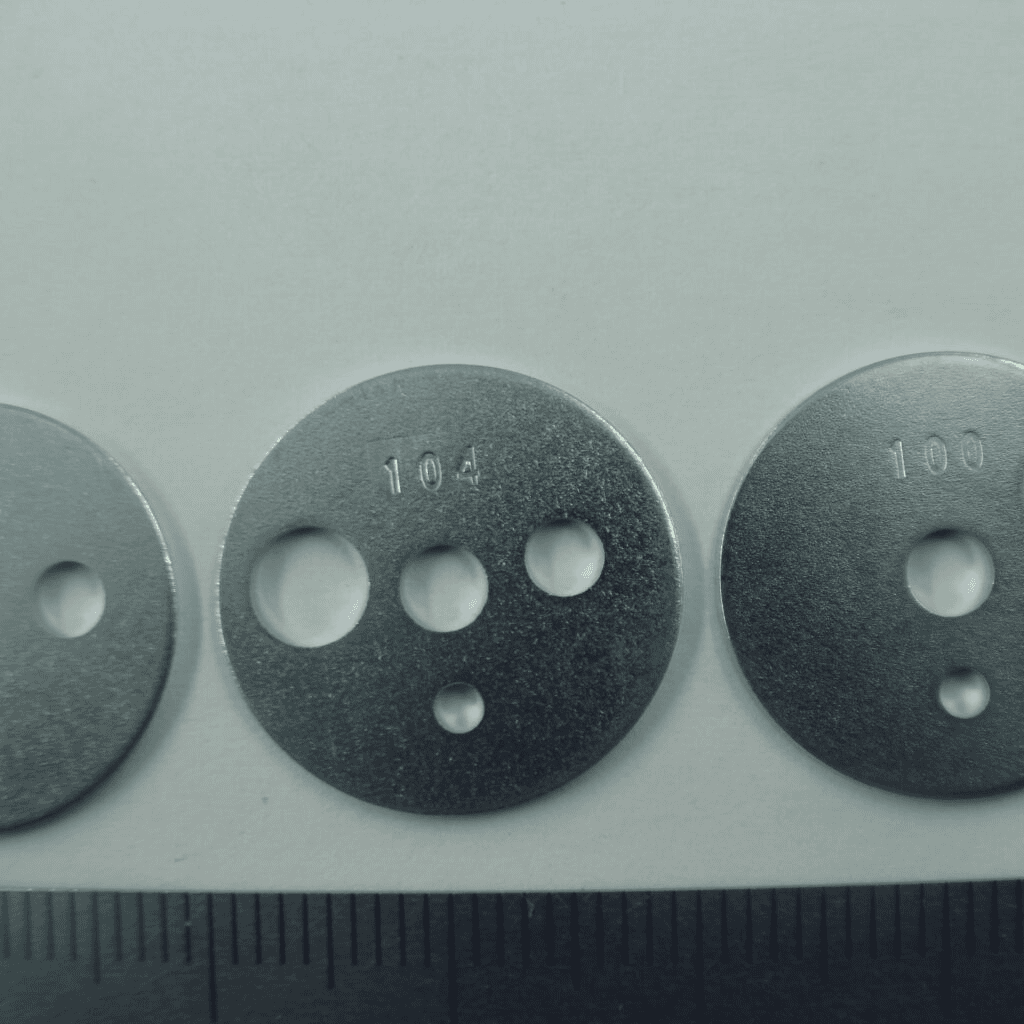
Carbon steel stamping is a widely used metal forming process for producing strong, accurate, and consistent parts. It uses specialized dies and stamping presses to shape carbon steel sheets into specific designs. This manufacturing method is common in automotive, construction, electronics, machinery, and many other industries.
The popularity of carbon steel stamping comes from its combination of strength, flexibility, cost efficiency, and production speed. Manufacturers can produce simple or complex metal components while maintaining consistent dimensions. Understanding how the process works can help businesses choose the right material and manufacturing method for their products.
What Is Carbon Steel Stamping?
Carbon steel stamping is a manufacturing process that transforms flat carbon steel sheets into finished components. A stamping press applies controlled force to the sheet metal through a specially designed die. Depending on the required shape, the process may involve cutting, bending, punching, drawing, or forming.
Carbon steel contains carbon as its primary strengthening element, along with iron and smaller amounts of other elements. Different carbon levels provide different combinations of strength, hardness, ductility, and formability.
During stamping, manufacturers select a suitable grade based on the part’s design and performance requirements. The correct material helps ensure that the finished component has the required strength and dimensional accuracy.
How Does the Carbon Steel Stamping Process Work?
The carbon steel stamping process begins with a sheet or coil of carbon steel. The material is placed into a stamping press and positioned between a die and a punch.
When the press moves, the punch applies force to the steel. The material then takes the desired shape or is separated into a specific form. The exact operation depends on the design of the component.
Common stamping operations include:
- Blanking for cutting basic shapes
- Punching for creating holes
- Bending for producing angles
- Drawing for creating deeper shapes
- Forming for creating curves and contours
- Embossing for adding raised or recessed details
Several operations can be combined into one production process. This can reduce handling and improve manufacturing efficiency.
Types of Carbon Steel Used for Stamping
Different carbon steel grades are suitable for different stamping requirements. Low-carbon steel is often preferred when excellent formability is important. It can be shaped easily without excessive cracking or deformation.
Medium-carbon steel provides greater strength while maintaining reasonable formability. It may be used for components that need additional mechanical performance.
Higher-carbon steel offers increased hardness and strength but can be more difficult to form. Manufacturers must carefully consider the balance between strength and flexibility before selecting the material.
The ideal grade depends on the part’s shape, thickness, required strength, production volume, and finishing requirements.
Key Benefits of Carbon Steel Stamping
One of the biggest advantages of carbon steel stamping is its ability to support high-volume manufacturing. Once the appropriate dies are prepared, manufacturers can produce large quantities of identical components efficiently.
Another benefit is excellent dimensional consistency. Automated stamping equipment can maintain precise measurements throughout production. This is especially important for parts that must fit together with other components.
Carbon steel is also relatively economical compared with many specialized metals. Its availability makes it a practical choice for businesses seeking reliable material at a reasonable cost.
Other benefits include:
- High production speed
- Consistent part quality
- Efficient material usage
- Strong finished components
- Compatibility with automation
- Reduced labor requirements
- Flexible design possibilities
These advantages make carbon steel stamping suitable for both simple and complex manufacturing applications.
Carbon Steel Stamping for High-Volume Production
High-volume manufacturing is one of the strongest applications for carbon steel stamping. Once stamping dies are installed and calibrated, presses can produce thousands or even millions of parts with consistent results.
Progressive stamping is especially useful for high-volume production. In this method, a strip of metal moves through several stations within the same die. Each station performs a different operation until the finished part is produced.
This approach reduces manual handling and shortens production time. It can also lower the cost per component when large quantities are required.
Applications of Carbon Steel Stamping
Carbon steel stamping is used across many industries because stamped components can be designed in numerous shapes and sizes.
In the automotive industry, stamped carbon steel parts may be used for brackets, structural components, panels, supports, and various hardware pieces.
The construction industry uses stamped parts for connectors, brackets, clips, fasteners, and other structural hardware.
In electrical and electronics manufacturing, carbon steel stamping can produce housings, mounting brackets, terminals, shields, and supporting components.
Other applications include:
- Agricultural equipment
- Industrial machinery
- Household appliances
- HVAC equipment
- Furniture hardware
- Transportation equipment
- Power equipment
- General hardware
The versatility of the process allows manufacturers to create components for both consumer and industrial products.
Choosing the Right Stamping Method
Selecting the right stamping method depends on the part’s design and production requirements. Simple components may require only blanking or bending. More complex parts can require multiple forming operations.
Progressive stamping is often suitable for high-volume production. Transfer stamping can be useful for larger or more complex components. Deep drawing is commonly selected when a flat sheet must be transformed into a deeper three-dimensional shape.
Manufacturers should evaluate material thickness, production volume, tolerances, part geometry, and tooling requirements before selecting a process.
The Importance of Stamping Dies
Stamping dies play a critical role in carbon steel stamping. They determine the final shape and dimensions of the component. A well-designed die can improve accuracy, reduce material waste, and increase production efficiency.
Die construction requires careful engineering. Designers must consider material behavior, clearance, forming forces, tolerances, and expected production volume.
High-quality dies can also have a long service life. Regular inspection and maintenance help prevent premature wear and production problems.
Quality Control in Carbon Steel Stamping
Quality control is essential for producing reliable stamped components. Manufacturers commonly inspect dimensions, surface condition, thickness, hole locations, and overall shape.
Modern production facilities may use automated inspection equipment to identify defects quickly. Regular press and die maintenance also helps maintain consistent results.
Common problems can include cracks, wrinkles, burrs, distortion, and dimensional variation. Proper material selection, tooling design, lubrication, and machine settings can help reduce these issues.
Surface Finishing After Stamping
Stamped carbon steel parts may require additional finishing after production. Carbon steel can be vulnerable to corrosion, so protective treatments are often important.
Depending on the application, manufacturers may use painting, powder coating, plating, galvanizing, or other protective finishes. Finishing can improve corrosion resistance, appearance, durability, and product performance.
The selected finish should match the environment in which the component will be used.
How to Choose a Carbon Steel Stamping Manufacturer
Choosing a reliable stamping manufacturer is important for achieving consistent quality. Businesses should evaluate the supplier’s equipment, tooling capabilities, quality control procedures, production capacity, and experience with similar materials.
It is also useful to discuss tolerances, material specifications, expected production quantities, finishing requirements, and delivery schedules before starting a project.
A capable manufacturer should be able to provide practical recommendations during the design stage. Early communication can help prevent costly tooling changes and production delays.
Conclusion
Carbon steel stamping is an efficient and versatile manufacturing process for producing durable metal components. It combines the strength and affordability of carbon steel with the speed and consistency of modern stamping technology.
From automotive parts and construction hardware to machinery and electronic components, carbon steel stamping supports a wide range of applications. By selecting the correct steel grade, stamping method, tooling, and finishing process, manufacturers can achieve reliable parts while controlling production costs.
As demand for efficient metal manufacturing continues to grow, carbon steel stamping remains an important solution for businesses requiring high-quality components at scale.