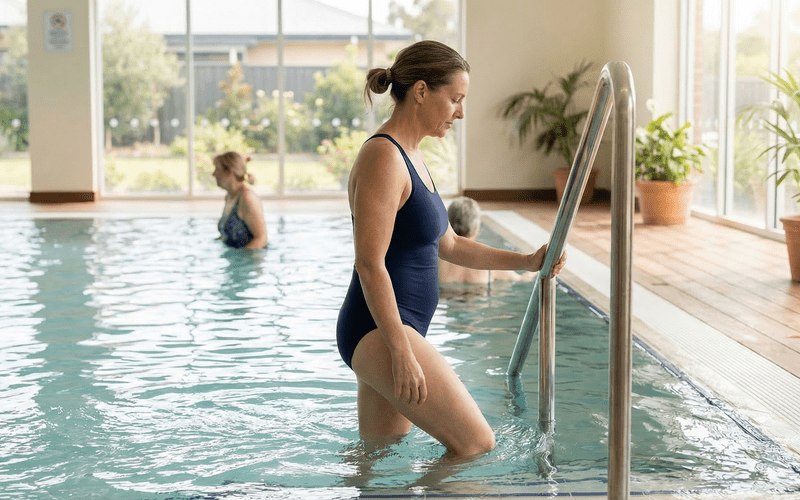
Water has long been used to support comfort, movement, and recovery. In modern settings, it is often used in both clinical care and everyday wellness routines. Some people use it after injury. Some use it to stay active with less impact. Others use it at home to relax stiff muscles or ease daily tension. This broad range of uses is one reason hydrotherapy remains an important topic in both rehabilitation and self-care.
At its core, hydrotherapy means the therapeutic use of water. It can include warm baths, pool exercise, cold water applications, contrast methods, or clinician-guided aquatic rehabilitation. The exact method depends on the goal. In a rehabilitation setting, the focus may be mobility, strength, or function. In a home setting, the goal may be comfort, stress relief, or gentle movement.
This article looks at the most common uses of hydrotherapy in rehabilitation and home wellness. It also explains why water can be helpful for different people and different needs.
Why Water Is Useful in Therapy and Wellness
Water changes how the body moves and feels. This is what makes it so useful.
First, water provides buoyancy. This means the body feels lighter when submerged. Less body weight is placed on joints and muscles. For people who find land-based exercise hard, this can make a big difference.
Second, water creates resistance. Moving through water takes effort in every direction. This allows people to work on strength and endurance without needing heavy impact or complex equipment.
Third, water surrounds the body with even pressure. This can create a feeling of support and stability during movement.
Finally, water can be warm or cold. Warm water is often used for comfort and relaxation. Cold water is often used in short recovery routines. These temperature effects add another layer to how hydrotherapy can be used.
Because of these properties, water is useful in many settings. It supports movement, rest, recovery, and low-impact exercise.
Common Uses in Rehabilitation
Rehabilitation often focuses on helping people move better, feel safer, and return to daily life with more confidence. Water can support that process in many ways.
1. Supporting Early Movement After Injury or Surgery
One common use of hydrotherapy in rehabilitation is helping people begin movement after injury or surgery. Land-based exercise can feel hard at this stage. Pain, weakness, and stiffness may all make movement more difficult.
Water can help by reducing stress on the body. A person may be able to stand, walk, or do simple exercises in water earlier than they can on land. The supported environment can make movement feel less intimidating. It may also help people build confidence as they return to activity.
This does not mean water replaces all other rehabilitation. Instead, it often serves as a useful step within a larger plan.
2. Improving Joint Mobility
Stiff joints can make daily activity harder. In rehabilitation, water is often used to support easier and gentler movement. Warm water can help some people feel less stiff. At the same time, buoyancy may reduce pressure on painful areas.
This can be especially helpful for people who need controlled movement practice. Gentle exercise in water may support range of motion work in a more comfortable setting.
3. Low-Impact Strength and Endurance Training
Many rehabilitation programs need a way to improve strength without overloading the body. Water offers a natural way to do this. Resistance is built into every movement. Arms and legs work against the water, but without the sharp impact of many land-based activities.
This makes hydrotherapy useful for people who need gradual strengthening. It may also help people rebuild endurance after time away from exercise.
4. Balance and Walking Practice
Water is often used to support balance training and walking practice. This is because the environment feels more supported than dry land. Some people find they can focus on movement with less fear of falling.
The water also slows movement. This can give people more time to react and adjust. For rehabilitation, this slower and more supported environment can be useful during gait training or basic functional movement practice.
5. Managing Chronic Pain With Gentle Activity
Pain can make movement harder, but avoiding movement completely can create other problems over time. In some rehabilitation settings, water is used to help people move in a way that feels more manageable.
This can be relevant for people with joint pain, back discomfort, or conditions where high-impact exercise is not well tolerated. The goal is not to force activity. The goal is to create a setting where movement may feel more possible.
6. Supporting Neurological Rehabilitation
Water-based exercise is also used in some neurological rehabilitation settings. The supportive nature of water can help with movement practice, balance, and body awareness. The exact use depends on the person and the condition, but water may offer a setting where controlled movement feels safer and more accessible.
Again, hydrotherapy is not a cure by itself. It is one tool that may be used within a broader rehabilitation approach.
Common Uses in Home Wellness
Not everyone uses hydrotherapy in a clinical setting. Many of the most familiar uses happen at home. These uses are often simpler and less structured, but they can still play a valuable role in comfort and routine.
1. Warm Baths for Relaxation
This is one of the most common home uses of hydrotherapy. A warm bath is simple, familiar, and widely available. Many people use it at the end of the day to relax or ease muscle tension.
Warm water can help create a sense of comfort. It may also make stiff movement feel easier for a short time. For many people, this is the most practical entry point into hydrotherapy.
2. Easing Everyday Muscle Soreness
After long hours of sitting, physical work, or exercise, some people use warm water to ease soreness. This does not need to be complicated. A short soak or local warm water application may be enough for a simple home routine.
The goal in these cases is not medical treatment. It is everyday relief and recovery support.
3. Building a Gentle Wellness Routine
Home hydrotherapy can also become part of a regular wellness routine. Some people use warm water before stretching. Some use it in the evening as part of a calm bedtime pattern. Others use short recovery sessions after exercise.
These routines are often helpful because they are easy to repeat. Consistency matters more than complexity in many home wellness habits.
4. Supporting Low-Impact Activity at Home
When people have access to a suitable water setting, they may use it for gentle movement at home. This can include basic walking in water, light exercise, or slow mobility work.
This type of use can be appealing for people who do not enjoy high-impact workouts. It may also help people stay active when land-based movement feels less comfortable.
5. Short Recovery Sessions After Exercise
Some people use cold water or alternating warm and cold water as part of recovery routines. These sessions are usually short and goal-specific. Not every method works the same way for every person, but they are commonly included under the wider hydrotherapy umbrella.
At home, it is important to keep these routines simple and safe. Extreme temperatures or long sessions are usually not necessary.
6. Comfort During Periods of Stress
Water is not only used for physical reasons. Many people turn to warm water during stressful periods. A bath or quiet soak can feel calming. It may help create a pause in a busy day.
This kind of use is common in home wellness because it is practical and easy to understand. While it should not be seen as a treatment for mental health conditions, it can be part of a healthy self-care routine.
The Difference Between Rehabilitation and Home Wellness Use
The same method can be used in different ways depending on the setting.
In rehabilitation, hydrotherapy is more likely to be goal-based. A person may work with a therapist. The session may focus on specific movements, walking practice, strength, or function. Progress is often measured over time.
In home wellness, the approach is usually simpler. The focus may be relaxation, gentle movement, or comfort after a long day. There is less structure, but that does not make it unimportant. For many people, small home practices are easier to maintain than formal programs.
The key difference is not that one is serious and the other is casual. The real difference is purpose and supervision.
Who May Find Hydrotherapy Helpful
Different people may use hydrotherapy for different reasons. It may be useful for:
- people who prefer low-impact movement
- those returning to activity after a period of rest
- individuals who feel stiff or sore
- people building simple recovery habits at home
- those who want a more supported exercise environment
It is important to remember that individual needs vary. What feels helpful for one person may not suit another.
Safety Still Matters
Even simple home hydrotherapy should be approached with care. Water that is too hot can be stressful for the body. Very cold water may also be uncomfortable or unsuitable for some people. Session length matters too.
People with certain health concerns should seek guidance before beginning. This includes those with unstable heart conditions, open wounds, fever, severe respiratory problems, or other medical issues that may affect water safety.
A person should stop immediately if they feel chest pain, dizziness, shortness of breath, or new and worsening pain.
For home use, simple safety habits can help:
- keep water at a moderate temperature
- avoid very long sessions
- stay hydrated
- stand up slowly after soaking
- have support nearby if you are new to water-based routines
Why Hydrotherapy Remains Popular
One reason hydrotherapy remains widely used is its flexibility. It can be simple or structured. It can support rehabilitation goals or fit into an ordinary home routine. It can involve movement or rest. It can be done with minimal equipment or in a clinical setting.
Another reason is accessibility. Not every person has access to a therapy pool, but many people can begin with something as simple as a warm bath. This makes water-based practice easier to explore than some other wellness approaches.
Most of all, hydrotherapy works with the body in a way that often feels intuitive. Water supports, surrounds, and resists at the same time. That combination makes it useful for many kinds of physical and daily comfort needs.
Final Thoughts
The common uses of hydrotherapy in rehabilitation and home wellness reflect just how versatile water can be. In rehabilitation, it can support early movement, strength, balance, mobility, and low-impact exercise. In home wellness, it can help with relaxation, gentle recovery, simple movement, and daily comfort.
Not every method is right for every person, and hydrotherapy should not be seen as a cure-all. Still, when used in a safe and practical way, it can be a valuable part of both structured care and everyday wellness. From guided rehabilitation sessions to a quiet warm bath at home, the therapeutic use of water continues to offer a simple and adaptable way to support movement, recovery, and well-being.