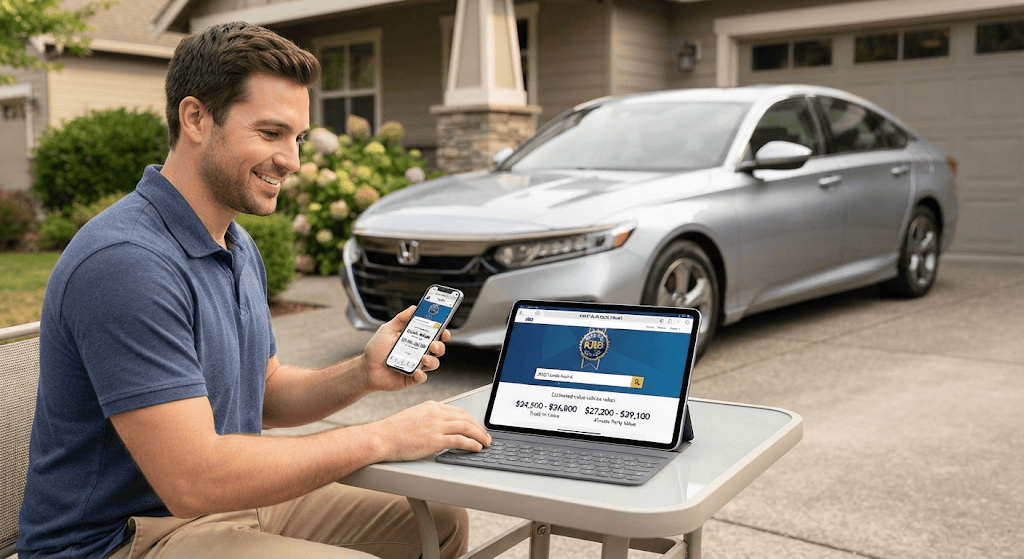
Ever stared at your car and wondered, “What is this thing actually worth on the open market?” Whether you are trying to upgrade your daily commute, clear out space in your garage, or just curious about your financial assets, figuring out a vehicle’s worth can feel like cracking a safe. Fortunately, checking the kelly bluebook value has long been the gold standard for taking the guesswork out of buying and selling cars.
Getting an accurate car appraisal doesn’t have to be a headache. Understanding how vehicle pricing tools work ensures you never leave money on the table.
Decoding the Kelley Blue Book Value
For nearly a century, Kelley Blue Book (KBB) has remained a trusted household name in the automotive industry. But what does that iconic “blue book” number actually represent?
In short, KBB is a comprehensive pricing guide that analyzes real-world data, regional market shifts, seasonal trends, and wholesale auction results. Instead of throwing out a random guess, the platform processes millions of transactional data points to generate an accurate baseline.
- The Data Engine:Prices are updated weekly to mirror current supply and demand.
- Geographic Relevance:Car prices in snowy regions differ drastically from desert climates, and KBB factors your local ZIP code into the equation.
Trade-In Value vs. Private Party Value: What’s the Difference?
One of the biggest mistakes people make is assuming a car has only one universal price tag. Depending on your next move, your kelly bluebook value will shift across distinct categories:
- Trade-In Value:This is what a local dealership will offer you for your vehicle.It is usually the lowest estimate because dealerships factor in reconditioning costs, overhead, and profit margins. However, it offers unbeatable convenience.
- Private Party Value: This is what you can expect to pocket if you sell the car yourself directly to another buyer online or via local listings. It demands more time and effort, but yields a higher return than a trade-in.
- Dealer Retail Price: This is what a dealership lists a reconditioned car for on their lot.
Step-by-Step: How to Accurately Check Your Car’s Worth
Getting an precise estimate takes just a few minutes if you have the right details on hand. Follow these steps to maximize your accuracy:
- Gather Your Vehicle Specs:Have your exact make, model, year, trim package, and current odometer reading ready.
- Locate Your VIN: Entering your 17-digit Vehicle Identification Number (VIN) or license plate pulls up exact factory options automatically.
- Be Brutally Honest About Condition: Don’t grade your car as “Excellent” if it has minor bumper scratches, torn upholstery, or dashboard warning lights. Select between Excellent, Good, Fair, or Poor realistically to prevent rude awakenings later.
- Account for Upgrades: Did you add custom wheels, a premium sound system, or fresh all-weather tires? Mention these custom extras, as they can bump up your valuation.
Frequently Asked Questions
How often do Kelley Blue Book values change?
KBB updates its pricing data on a weekly basis. Because vehicle values fluctuate heavily based on seasonal demand, fuel prices, and macroeconomic shifts, checking the valuation right before you sell or trade is crucial.
Is KBB higher or lower than actual cash offers?
KBB provides a very reliable benchmark, but actual cash offers from instant buyers or dealerships may vary slightly based on immediate inventory needs at individual lots.
Can a bad vehicle history report lower my blue book value?
Yes. While KBB asks for your car’s physical condition and mileage, major structural damage, salvage titles, or accidents logged on a vehicle history report will typically drive the real-world trade-in offer below the standard blue book range.
Conclusion
Mastering the kelly bluebook value empowers you to walk into a dealership or list a car online with absolute confidence. By understanding the nuances between trade-in and private party pricing, and by evaluating your car’s true condition objectively, you ensure a fair deal. Ready to take the next step? Head over to the official valuation tools, run your VIN, and explore related guides on how to prep your car for a fast, high-dollar sale!